The Sister Lakes
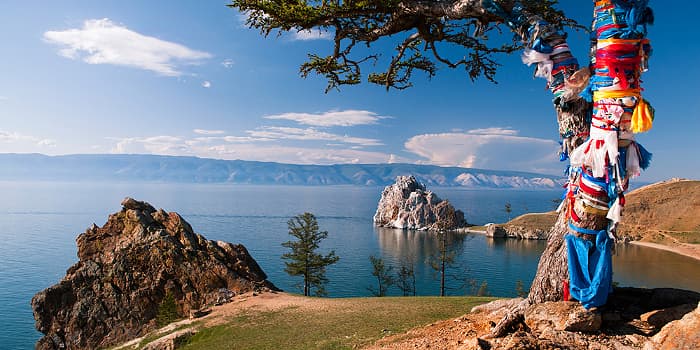
Khövsgöl and Baikal are geologically bound. They sit within the same massive tectonic rift valley, and the waters of Khövsgöl eventually flow all the way into Baikal via the Eg and Selenge rivers.
More importantly, they were historically part of the same unified cultural expanse. The very name Baikal is a Russian adaptation of the Mongolian word Baigal (Байгаль), which simply translates to "nature." To the Mongols who inhabited its shores, the lake was the ultimate natural phenomenon.
The Severing of the North
The separation of the two lakes was not a natural divide, but an imperial one. For centuries, the dense forests connecting Khövsgöl and Baikal were indistinguishable—a single, sprawling northern territory inhabited by the Buryats. Bound by blood and speaking the Mongolian language, they were not a separate people, but a direct extension of the nomadic world to the south.
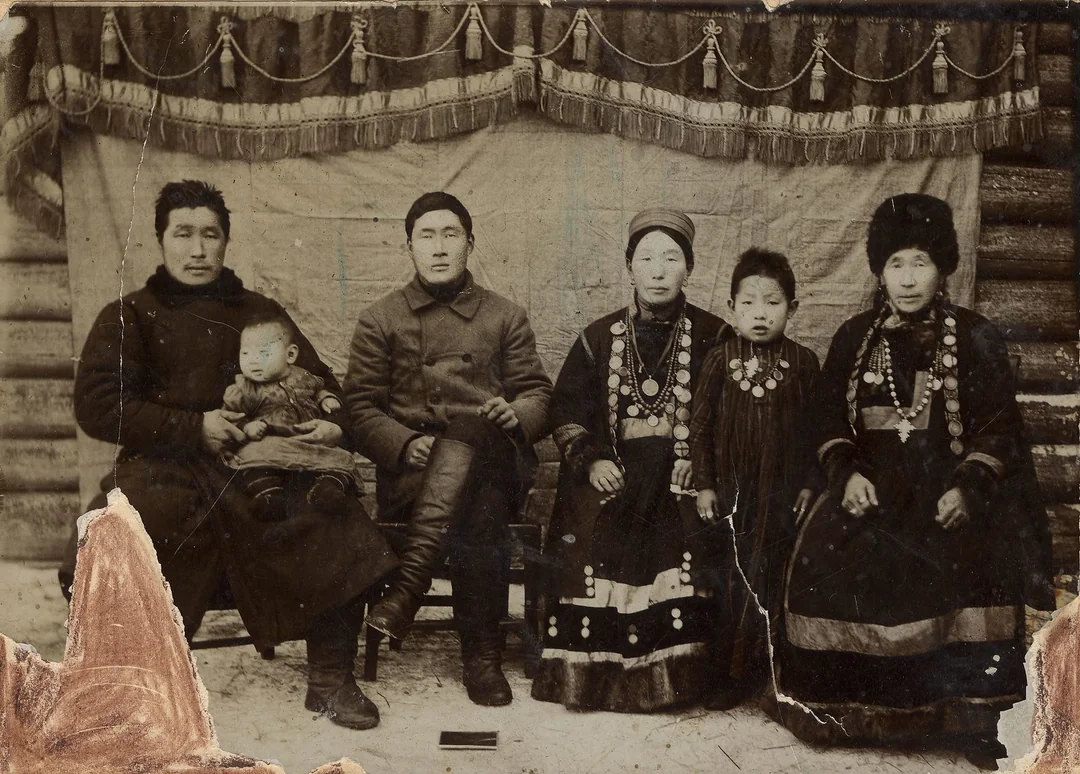
A portrait of a West Buryat family, late 19th century. Archival photograph.
However, as the Russian Empire expanded eastward across Siberia, and the Qing Dynasty secured its grip on the Mongolian steppe, the two powers collided. Through a series of treaties—most notably the Treaty of Kyakhta in 1727—a hard geopolitical line was drawn directly through the taiga. Lake Baikal and the Buryat people were formally absorbed into the Russian Empire, while Lake Khövsgöl remained on the southern side of the border, left as the northernmost frontier of the Mongolian state.
The Transformation of the Taiga
This geopolitical fracture would permanently alter the destiny of the two lakes. For millennia, the vast expanse of Siberia surrounding Baikal was the exclusive domain of Mongolic, Turkic, and Tungusic tribes—peoples intimately adapted to the harsh, sacred rhythms of the forest and steppe.
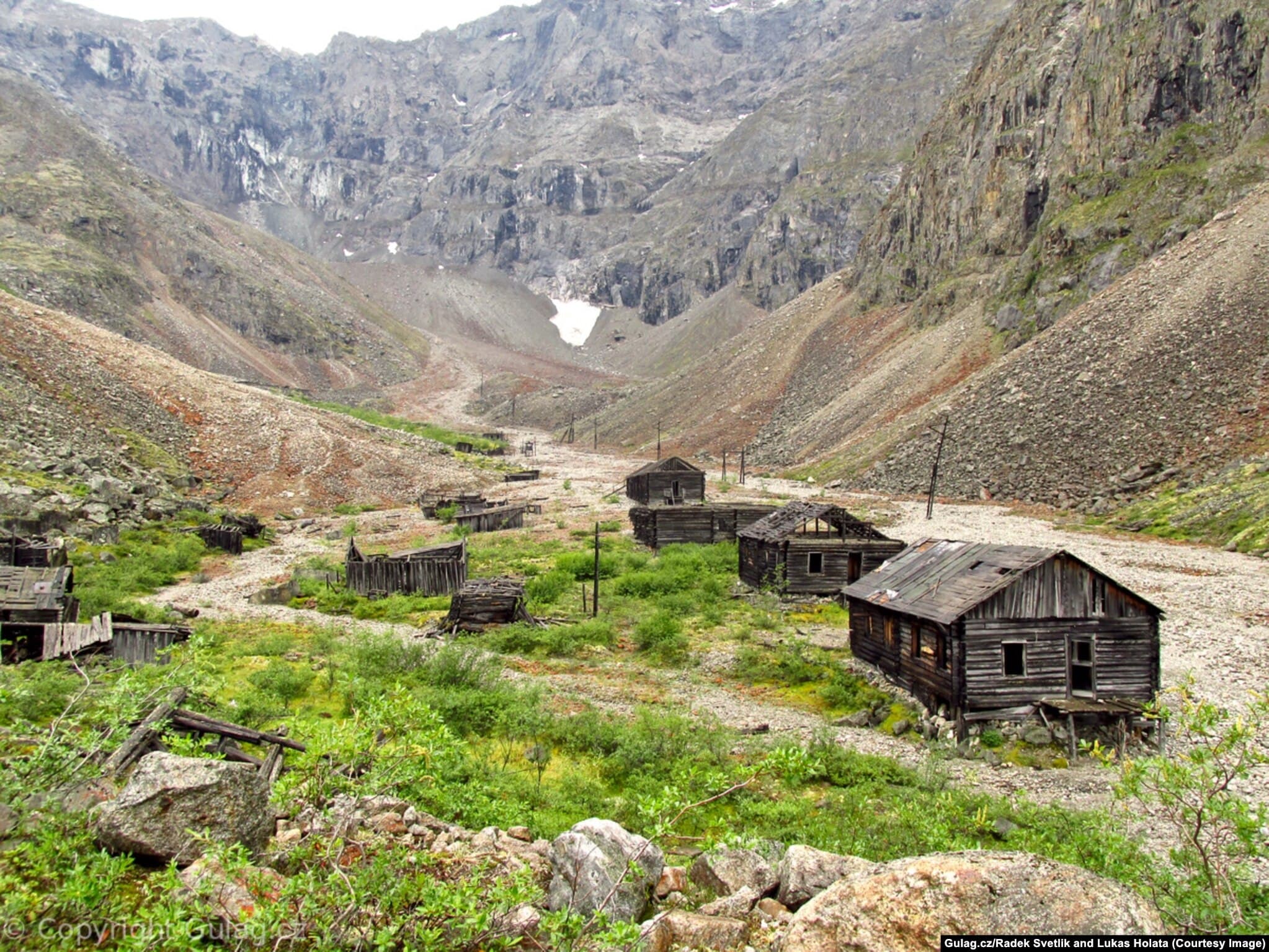
The decaying remnants of the Soviet penal network, deep in the Siberian taiga. Photograph by Amos Chapple / RFE/RL.
As the Russian—and later Soviet—state tightened its grip on Siberia, the taiga was repurposed. The deep forests around Baikal, once the sanctuary of indigenous hunters and shamans, were transformed into the backbone of the Soviet penal system. Across the decades, an estimated 18 million prisoners were absorbed into the vast network of gulags spread across the Siberian expanse. The forced insertion of European prisoners into the freezing, alien environment of the Asian taiga remains one of the great geographic and psychological traumas of the 20th century.
While Baikal saw its shores industrialised and its surrounding forests turned into penal colonies, Khövsgöl experienced a very different 20th century. Sheltered just south of the border, the "Mother Ocean" of Mongolia was largely spared this mass demographic trauma. It was left in silence, allowing it to remain the pristine sanctuary of the old north.
“The water is unusually transparent, so that you can look through it as through air... I have never in my life seen such richness of colour. It is a marvel.”