
The Realm of the Zasagt Khan
Before the 1930s, the modern concept of Khövsgöl did not exist. Instead, the Mongolian steppe was divided into four massive, sweeping provinces. The territory that encompasses today's Khövsgöl belonged largely to the Zasagt Khan Aimag (The Province of the Ruling King). Governed by dynastic nobles, it was a vast, wild frontier region defined by nomadic movement rather than fixed borders.
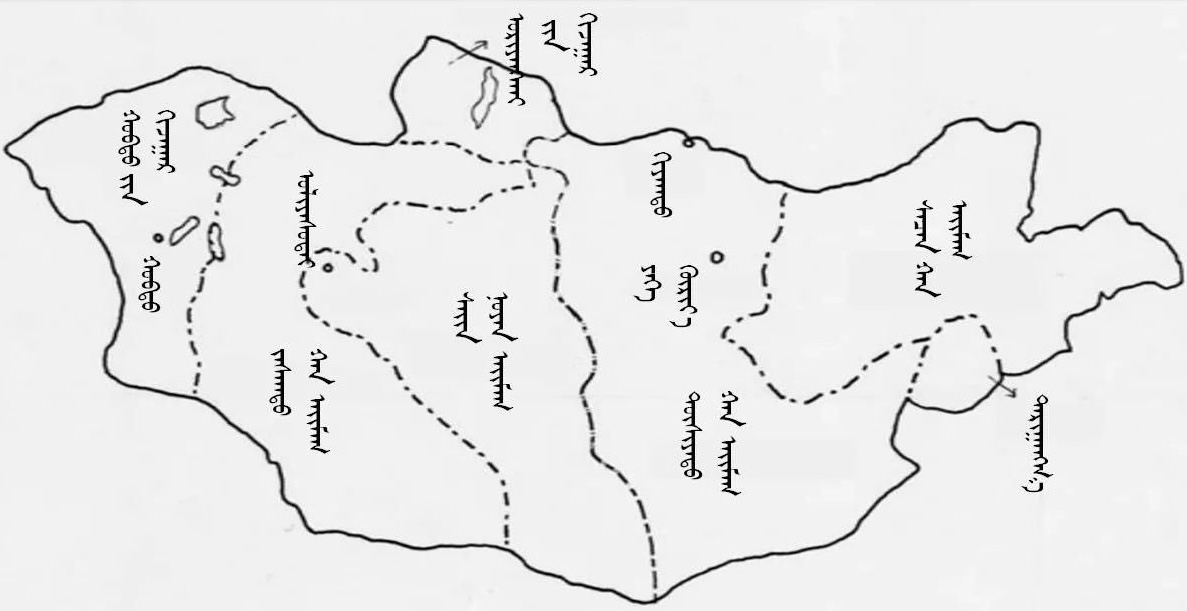
THE FOUR AIMAGS (c. 18th – Early 20th Century)
Before the modern reorganisation into twenty-one provinces, Outer Mongolia was administered by the Qing Dynasty as four massive, sweeping aimags. From west to east, they were the realms of the Zasagt Khan, Sain Noyon Khan, Tüsheet Khan, and Setsen Khan. Flanked by special military frontiers (like Khovd in the far west), this four-province structure governed the nomadic movement of the steppe for nearly two hundred years, until the collapse of the Bogd Khanate and the rise of the Soviet-backed Mongolian People's Republic in the 1920s.
The Original Capital
As the Qing Dynasty exerted its influence, fixed settlements became necessary to monitor trade and territorial lines. Khatgal was founded in 1727 as a Qing military border post. Because of its strategic proximity to the Russian frontier, it naturally developed into a bustling transit hub.
When the modern Khövsgöl province was officially carved out and established in 1931, Khatgal was designated as its first administrative capital. However, logistical realities quickly set in, and just two years later in 1933, the provincial centre was permanently relocated 100 km south to the more accessible town of Mörön.
Mongolia's Industrial Frontier
Despite losing its capital status, Khatgal was not abandoned; it transformed into an industrial powerhouse. In 1933, the Khatgal Wool Washing Factory was established on the southern shore of the lake.
Built with Soviet engineering and capital, it was a massive milestone for the country—one of the very first fully mechanised light-industry factories in Mongolia. The facility was considered a triumph of national engineering, and its round-the-clock operations were even immortalised in a state documentary capturing an inspection by Mongolian leader Yumjaagiin Tsedenbal. The surviving footage, highlighting the relentless hum of the machinery and the strict quotas of the command economy, perfectly captures the heavy, demanding momentum of the era.
Sourced via the Ergen Dursakhad Saikhan digital archive.
The Hub of the North
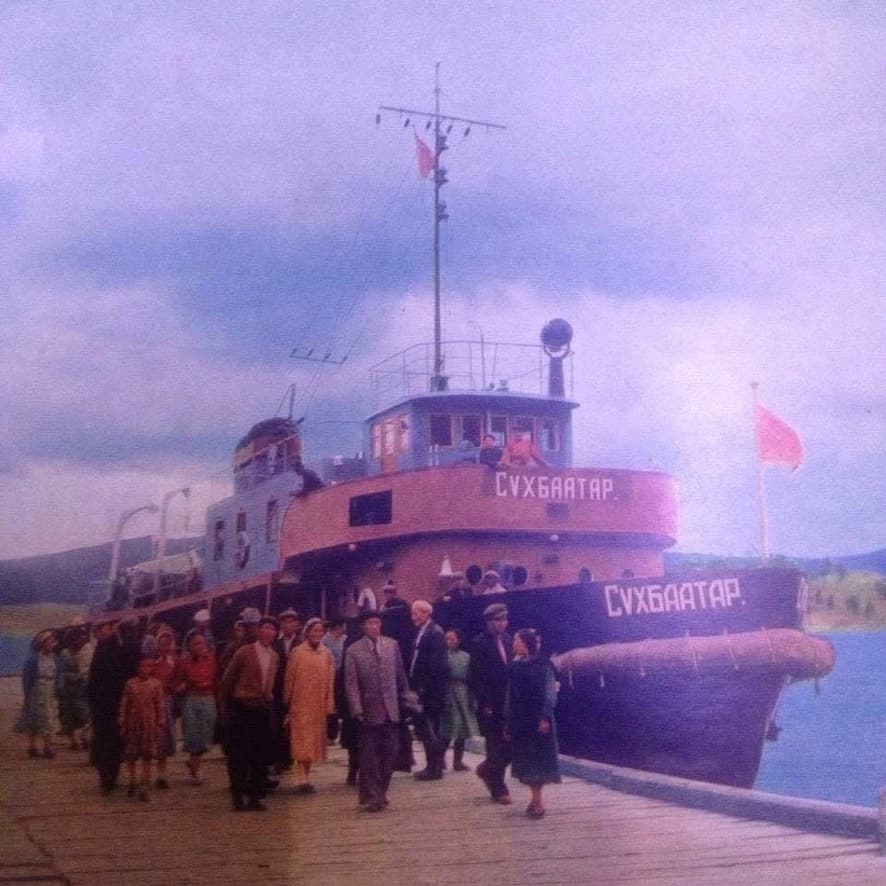
Khatgal became a bustling, cinematic centre of commerce. Wool and goods were transported not just by modern trucks, but by steamboats across the summer waters, horse-drawn sledges fitted with iron horseshoes over the winter ice, and camel caravans arriving from as far away as the Gobi Desert.
The Power Grid
The factory was remarkably advanced for its time. Its massive steam boilers generated enough surplus electricity to power Khatgal's schools, hospitals, and homes—making it the first rural town in Mongolia to have 24-hour electricity, decades before the national grid arrived.
The Ecological Pivot
For over half a century, the factory operated around the clock, processing thousands of tons of wool bound for international markets. However, in 1988, a landmark government resolution was passed. To protect the pristine ecology and pure waters of Lake Khövsgöl, the heavy wool-washing operations were permanently ordered to cease.
Today, the heavy industrial machinery and cargo barges are gone, and Khatgal has returned to a quieter existence. Yet, this era of sweeping geopolitical shifts and early industry remains woven into the architecture, the local infrastructure, and the families who built the modern north.